Veterinary workflow automation is the use of software and artificial intelligence to automatically complete repetitive administrative tasks — from patient intake and SOAP documentation to billing, inventory reordering, and appointment reminders. These tasks currently consume 35–40% of a veterinary clinic's total working hours, pulling veterinarians and staff away from what matters most: patient care.
An independent study conducted in 2025 found that veterinary clinics adopting comprehensive automation solutions saved an average of 6.5 hours per week. Depending on clinic size and the depth of automation implemented, this figure can reach 12+ hours weekly — the equivalent of more than one full working day recovered every week.
- Daily savings (single-doctor clinic): 55–90 minutes
- Weekly savings: 6–12+ hours depending on clinic size
- Annual financial equivalent: $7,800–$15,600 per staff member
- Typical ROI timeline: Most clinics achieve full return within 60–90 days
The Time Crisis in Veterinary Practice
Veterinary medicine is facing a workforce crisis driven not just by a shortage of professionals, but by unsustainable workloads. According to the American Veterinary Medical Association's 2024 workforce report, 68% of veterinarians report symptoms of professional burnout. One of the leading contributors is not clinical complexity — it's administrative burden.
A typical veterinarian sees 20–25 patients per day while simultaneously writing SOAP notes, processing invoices, managing prescriptions, tracking inventory, returning client calls, and reviewing lab results. Research consistently shows that veterinarians spend 40% of their working hours on administrative tasks rather than direct patient care. For a 10-hour workday, that is four full hours of non-clinical work.
The problem extends beyond veterinarians. Front desk staff spend hours daily on phone calls, appointment scheduling, and manual data entry. Veterinary technicians handle inventory counts and document preparation alongside patient care duties. Clinic managers manually compile weekly reports from spreadsheets. Every one of these tasks can be automated.
7 Workflows You Can Automate Today#
Patient Check-In and Intake Forms (Save 45 Minutes Per Day)
In a traditional check-in process, the pet owner arrives, fills out a paper form, and the receptionist manually types that information into the system. This takes 7–10 minutes per new patient — time multiplied across every arrival each day.
With automated intake, a digital pre-registration form is sent to the pet owner when they book their appointment. By the time they arrive, their information is already in the system. Check-in is reduced to a quick confirmation. For a clinic seeing six new patients daily, this recovers 42–60 minutes every day.
- Digital anamnesis forms sent automatically at booking confirmation
- Patient data syncs directly into the record — no re-entry needed
- Vaccination history and medication lists pre-populated from previous visits
- Consent forms (anesthesia, surgical) collected via digital signature
SOAP Note Documentation with AI Voice Dictation (Save 90 Minutes Per Day)
SOAP documentation is the single largest administrative time sink for veterinarians. While an examination itself takes 15–20 minutes, the subsequent note-writing adds 10–15 minutes per patient. For a vet seeing 15 patients daily, that is 150–225 additional minutes of documentation work every day.
AI-powered voice dictation allows the veterinarian to speak observations aloud during or immediately after the examination. The system understands veterinary terminology and converts speech into structured SOAP format automatically. The doctor reviews and approves — a process that takes 1–2 minutes instead of 10–15.
- Real-time speech-to-SOAP conversion with veterinary terminology recognition
- Automatic categorization into S, O, A, and P sections
- Auto-population of medication dosages and treatment protocols
- Previous visit history surfaced automatically for comparison
Appointment Reminders and Follow-Up Messages (Save 30 Minutes Per Day)
A typical veterinary clinic places 25–35 reminder calls per day, each lasting 2–4 minutes. Without automation, this means a receptionist spends 50–140 minutes daily on outbound reminder calls alone — before handling any inbound inquiries.
Automated messaging sends SMS or app notifications 24 hours and 2 hours before each appointment. Pet owners can confirm, cancel, or reschedule with a single tap. Post-visit follow-up messages with care instructions are sent automatically, improving client experience without adding staff workload.
- 24-hour and 2-hour pre-appointment reminders sent automatically
- Proactive outreach for patients due for vaccines or annual checkups
- Post-visit discharge instructions delivered automatically
- No-show rates reduced by an average of 50% in automated clinics
Inventory Reordering and Stock Alerts (Save 20 Minutes Per Day)
Manual inventory management is one of the most time-consuming yet underestimated tasks in veterinary practice. Weekly physical counts, expiration date checks, vendor communications, and order tracking collectively consume hours of staff time that could be spent on patient care.
Automated inventory systems deduct stock levels in real-time as medications and supplies are logged in treatment records. When stock drops below a defined minimum, the system alerts the manager and generates a draft purchase order for the preferred supplier. No counting, no guessing, no emergency orders.
- Real-time stock deduction tied directly to treatment records
- Automatic low-stock alerts before critical shortages occur
- Expiration date monitoring with advance warning notifications
- Auto-generated purchase order suggestions by supplier
Billing and Invoice Generation (Save 25 Minutes Per Day)
Manual invoicing requires opening the treatment record, listing every service and medication administered, entering prices, calculating totals, and printing or emailing the invoice. For 20 patients daily, this process alone takes well over an hour.
Automated billing pulls all services, medications, and consumables directly from the completed SOAP note and generates a draft invoice in seconds. The clinic confirms and sends. Integration with accounting software means the transaction is recorded automatically. Online payment links reduce collection time further.
- Invoice auto-generated from completed treatment record
- Integration with accounting and bookkeeping platforms
- Online payment link sent automatically at checkout
- Automated follow-up reminders for outstanding balances
Lab Result Processing and Client Notification (Save 15 Minutes Per Day)
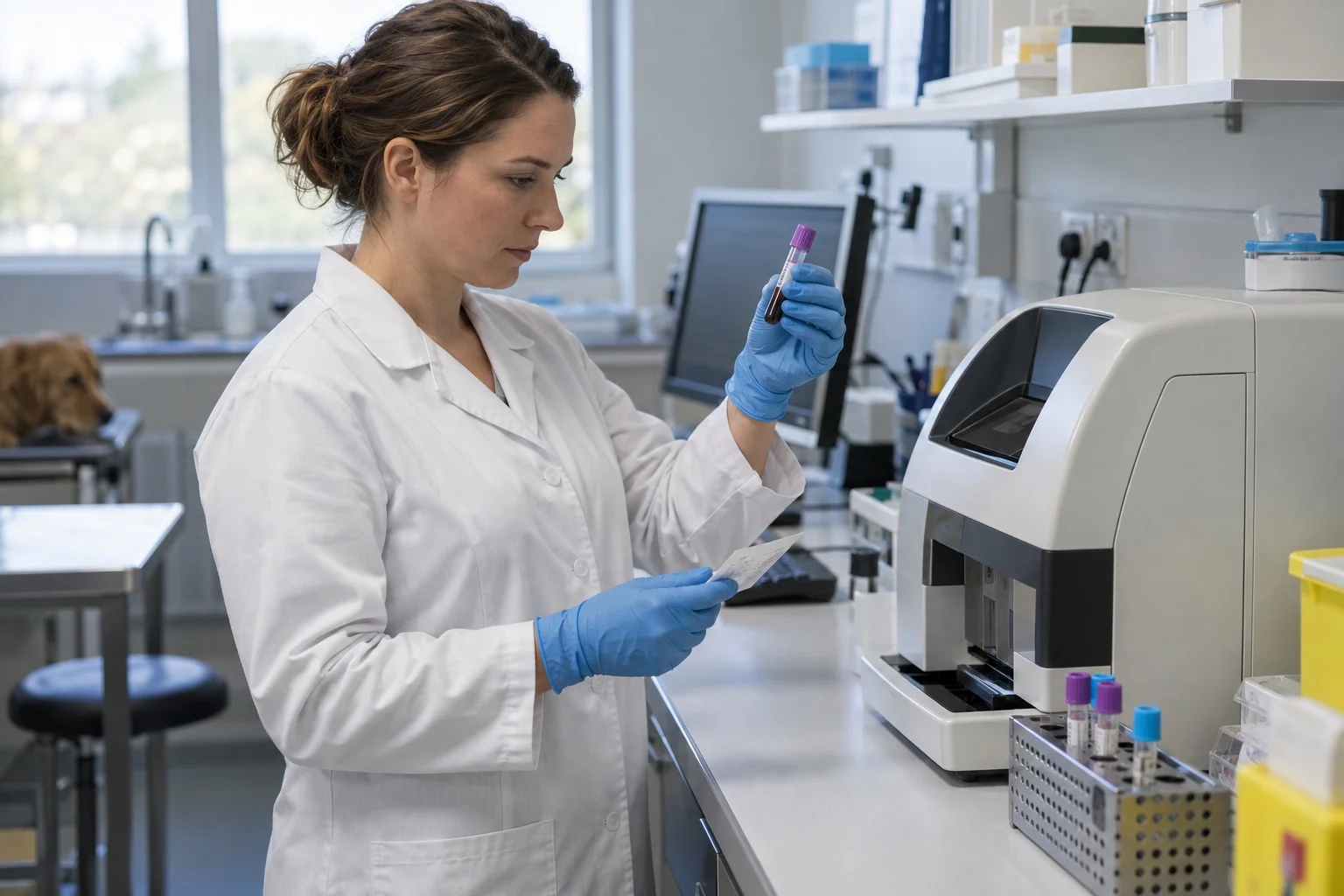
When laboratory results arrive, the traditional workflow involves manually attaching results to the patient file, reviewing them, and then calling the client to share findings — a process that takes 10–15 minutes per result set and is frequently interrupted or delayed.
Integrated lab systems receive results directly into the patient record and notify the veterinarian for review. Once approved, the system automatically sends a secure notification to the pet owner through the client portal or SMS. Abnormal values are flagged for priority review, ensuring nothing critical is missed.
- Lab results automatically attached to patient records on receipt
- Critical value flagging for immediate veterinary attention
- Automatic client notification after veterinary review and approval
- Trend analysis comparing current results to historical values
Prescription Refill Management (Save 10 Minutes Per Day)
Chronic medication management is a recurring workflow in every veterinary practice. Without automation, each refill request involves a phone call, a manual chart review, a written prescription, and a preparation confirmation — often with a callback loop that adds further delays.
Automated refill management proactively alerts pet owners when their pet's chronic medication is due for renewal. Owners submit refill requests online. The veterinarian reviews the patient's history and approves with one click. The prescription is prepared and the owner is notified for pickup or delivery — no phone calls required.
- Proactive refill reminders sent to clients before medications run out
- Online refill request portal for pet owners
- Automatic drug interaction and dosage history check
- One-click veterinarian approval with audit trail
Time Savings Breakdown#
| Workflow | Manual Time (Daily) | Automated Time (Daily) | Weekly Savings |
|---|---|---|---|
| Patient check-in and intake | 45–60 min | 5–10 min | 4.5–5 hrs |
| SOAP note documentation | 90–120 min | 15–20 min | 6–8 hrs |
| Appointment reminders | 30–50 min | 2–3 min | 2.5–4 hrs |
| Inventory management and ordering | 20–30 min | 3–5 min | 1.5–2 hrs |
| Invoice generation | 25–40 min | 5–8 min | 2–3 hrs |
| Lab result notification | 15–25 min | 2–3 min | 1–2 hrs |
| Prescription refill management | 10–20 min | 2–3 min | 0.5–1 hr |
| Total Savings | 235–345 min/day | 34–52 min/day | 18–25 hrs/week |
Setting Realistic Expectations
ROI Calculator: What Does 6 Hours Per Week Actually Save?#
To make the financial case concrete, consider what recovering six hours of weekly staff time is worth in real dollars — and that is before accounting for additional revenue from increased patient capacity.
ROI Calculation: 6 Hours/Week Saved Per Employee
- Average fully-loaded staff cost (tech/receptionist): $25/hour
- Weekly savings: 6 hours × $25 = $150/week
- Monthly savings: $150 × 4.3 = $645/month
- Annual savings (1 employee): $7,800/year
- Annual savings (3-employee clinic): $23,400/year
This calculation covers only labor cost savings. Clinics that redirect recovered time toward seeing additional patients generate further revenue. At an average appointment value of $150, booking just 3–5 additional patients per week adds $23,400–$39,000 in annual revenue — on top of the cost savings.
Veterinary practice management software with automation capabilities typically costs $300–$800 per month depending on clinic size and features. For most clinics, the complete return on investment is achieved within the first 60–90 days of full implementation.
Implementation Roadmap#
Phase 1: Quick Wins (Week 1)
Start with automations that require minimal setup time but deliver immediately visible results. These early wins build team confidence and demonstrate ROI before larger changes are introduced.
- Automated appointment reminders: Activate SMS/email reminders for all upcoming appointments. Setup takes 1–2 hours; savings begin immediately.
- Digital intake forms: Create and link a pre-registration form to your booking confirmation email or text.
- Automatic invoicing: Configure your service catalog in the system and enable auto-generation of invoices from completed treatment records.
Phase 2: Core Automation (Month 1)
Once the quick wins are embedded in daily workflow, move to deeper integrations that transform how core clinical processes operate. This phase requires more configuration time but delivers disproportionately larger savings.
- Inventory automation: Import current stock levels, set minimum thresholds for all medications and supplies, and connect preferred suppliers.
- Lab integration: Connect your primary diagnostic lab partners to enable direct result delivery into patient records.
- Prescription refill system: Build your chronic patient list and configure the refill reminder and online request workflow.
- Team training: Ensure all staff have practiced the new workflows before going live. Document any clinic-specific customizations.
Phase 3: AI Integration (Month 2–3)
With foundational automation in place, introduce AI-powered features that deliver the most dramatic individual time savings. This phase requires an adjustment period as veterinarians adapt to new documentation habits.
- AI voice dictation for SOAP notes: Introduce veterinarians to voice-driven documentation. Expect a 1–2 week adaptation period before full efficiency gains are realized.
- Smart reporting dashboard: Configure automated weekly performance reports to replace manual spreadsheet preparation.
- Predictive patient outreach: Enable AI-driven identification of patients overdue for wellness visits, vaccinations, or chronic disease monitoring.
- Client segmentation: Automate targeted communications for active, lapsed, and at-risk clients based on visit history.
Manual Workflow vs Automated Workflow#
Manual Clinic Operations vs Vetigen Automation
| Özellik | Geleneksel Yöntem | Vetigen ile |
|---|---|---|
| Patient check-in time | 7–10 minutes (form + manual data entry) | 1–2 minutes (pre-registration already complete) |
| SOAP note creation | 10–15 minutes of manual typing per patient | 1–2 minutes with AI voice dictation and review |
| Appointment reminders | 30–50 outbound calls per day | Automatic SMS/app notifications, zero manual effort |
| Inventory tracking | Weekly manual count taking 2–3 hours | Real-time automatic tracking, no counting required |
| Invoice generation | 3–5 minutes of manual entry per invoice | Auto-generated from treatment record in 30 seconds |
| Lab result notification | Phone call + hold + voicemail + callback | Secure automatic notification after one-click approval |
| Prescription refills | Phone + manual chart search + handwritten prescription | Online request + one-click approval + automatic prep notification |
| Weekly performance reports | 3–4 hours of manual spreadsheet compilation | Live dashboard + automatic weekly email summary |
Before we implemented automation, I was spending my evenings catching up on SOAP notes and callbacks. I had accepted that as part of the job. After six months with Vetigen, I leave the clinic on time almost every day. My notes are done before the next patient walks in. The team is less stressed. And our monthly revenue is up because we can actually see more patients. I only wish we had done it sooner.DDr. Jessica HarmonClinic Owner, 14 Years in Practice
Conclusion: The Clinics That Automate Win on Every Metric#
Veterinary workflow automation is no longer a competitive advantage — it is becoming a baseline expectation. Clinics that automate routine processes consistently outperform those that do not on every measurable dimension: staff retention, patient throughput, client satisfaction scores, and practice profitability.
The good news is that meaningful automation does not require a massive budget or a disruptive technology overhaul. Starting with appointment reminders, digital intake forms, and automated billing — all deployable within a single week — delivers immediate, measurable results. The 6+ hours saved weekly compounds into thousands of dollars and dozens of additional patients per year.
Every week spent on manual processes is a week of unnecessary cost, unnecessary stress, and unnecessary limits on your clinic's growth. The technology to change that is available today.
Vetigen is an AI-native veterinary operating system built specifically for the workflows described in this guide. Voice dictation for SOAP notes, automated reminders, smart inventory management, and integrated billing are all included in a single platform. Request a free demo and let us calculate exactly how many hours your clinic can reclaim each week.