Connect
 PetConnect
 Cortex
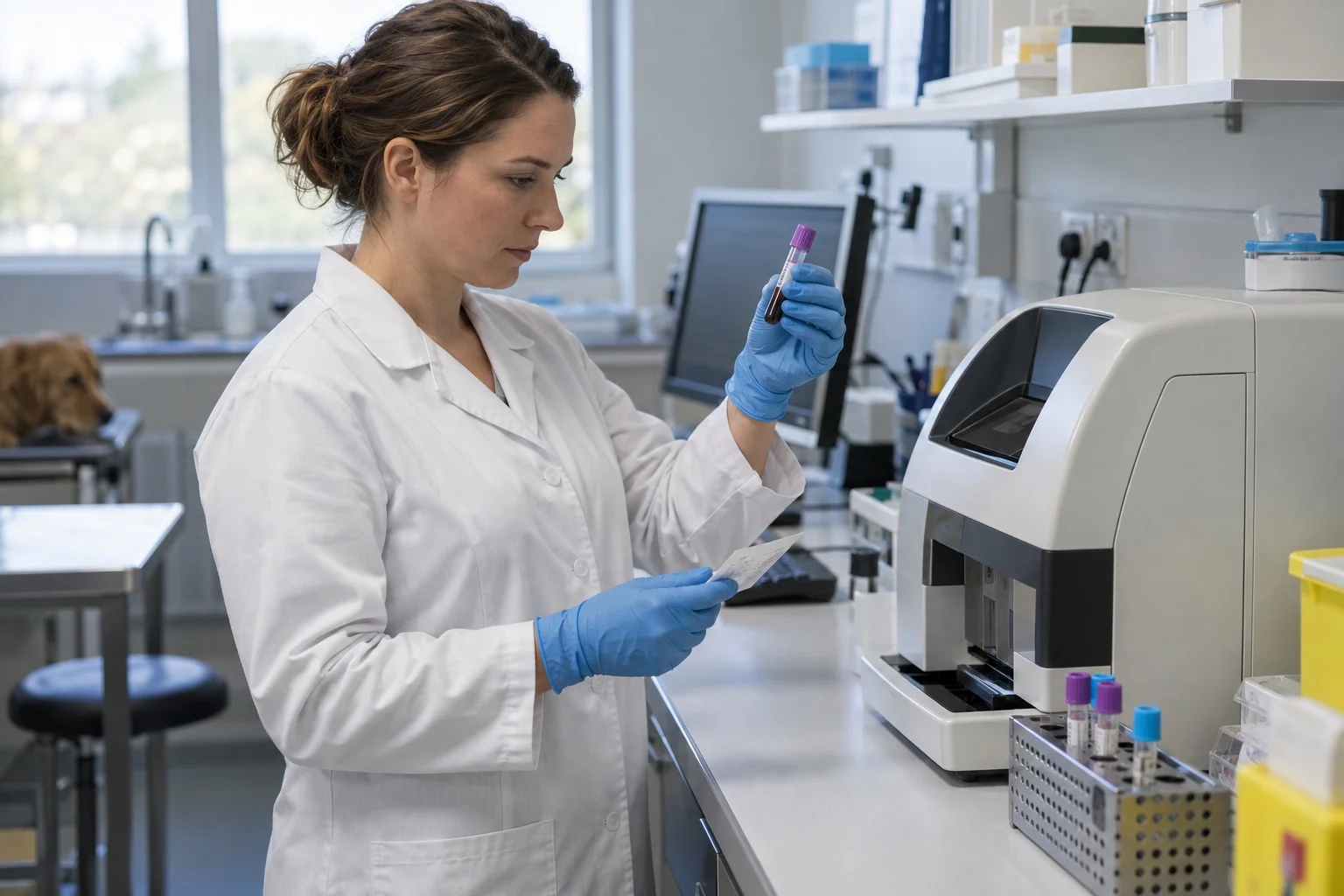
Veterinary anesthesia safety requires an individualized plan, trained staff and monitoring that continues into recovery. A record template supports this work; it does not decide whether a patient is stable or prescribe the response to a changing measurement.
This article is a workflow checklist for veterinary teams. The responsible veterinarian must set the patient-specific protocol and intervention criteria. Consult the 2020 AAHA Anesthesia and Monitoring Guidelines for Dogs and Cats for clinical guidance.
Before anesthesia: make responsibility explicit#
AAHA treats anesthesia as a continuum covering preanesthesia, induction, maintenance and recovery. Its framework includes patient assessment, equipment preparation and a plan tailored to the individual animal.
At the team briefing, identify who will administer anesthesia, who will monitor the patient and who will receive any escalation. Review the intended procedure and confirm where the approved plan is recorded. Avoid ambiguous handovers such as “someone will keep an eye on recovery.”
Use a checklist to confirm that the patient identity, relevant history, veterinarian’s assessment, planned monitoring and equipment checks are documented. Any uncertainty should be resolved by the responsible clinician before proceeding.
During anesthesia: observe, interpret and record#
Electronic measurements and direct patient assessment should be considered together. AAHA discusses monitoring oxygenation, ventilation, circulation, anesthetic depth and temperature, with attentive personnel interpreting changes. Periodic chart entries are a record of care; they do not replace ongoing observation. See AAHA’s maintenance and recovery guidance.
A practical record can separate four elements:
Record element | Purpose |
|---|---|
Time and observation | Establish what was seen and when |
Person notified | Show how concerns reached the responsible clinician |
Clinician-directed action | Record what was actually done |
Reassessment | Document the subsequent observation and next instruction |
Agree in advance how the monitor will summon help. A universal “abnormal value → drug” table is unsuitable for this checklist: the clinical meaning and response depend on the patient, measurement quality and anesthetic context.
Recovery is an active handover#
The procedure ending does not end anesthetic care. AAHA emphasizes vigilant observation and physiologic monitoring during recovery. The handover should state the current concerns, analgesia plan, observations to continue and the clinician responsible for discharge decisions.
Keep the recovery record with the anesthetic record. If responsibility changes, record the handover time and receiving team member rather than relying on memory at the end of a busy shift.
Discharge and team review#
Give owners clear, patient-specific instructions, expected recovery information and a route for urgent questions. AAHA provides an anesthesia discharge template and other team resources.
After a difficult case, review the communication and record together: Was escalation clear? Were actions timestamped? Was the recovery handover complete? Use the answers to improve the local checklist without inventing a safety percentage or treating documentation alone as a clinical outcome.
For the wider operational process, continue with our veterinary workflow automation guide.